About
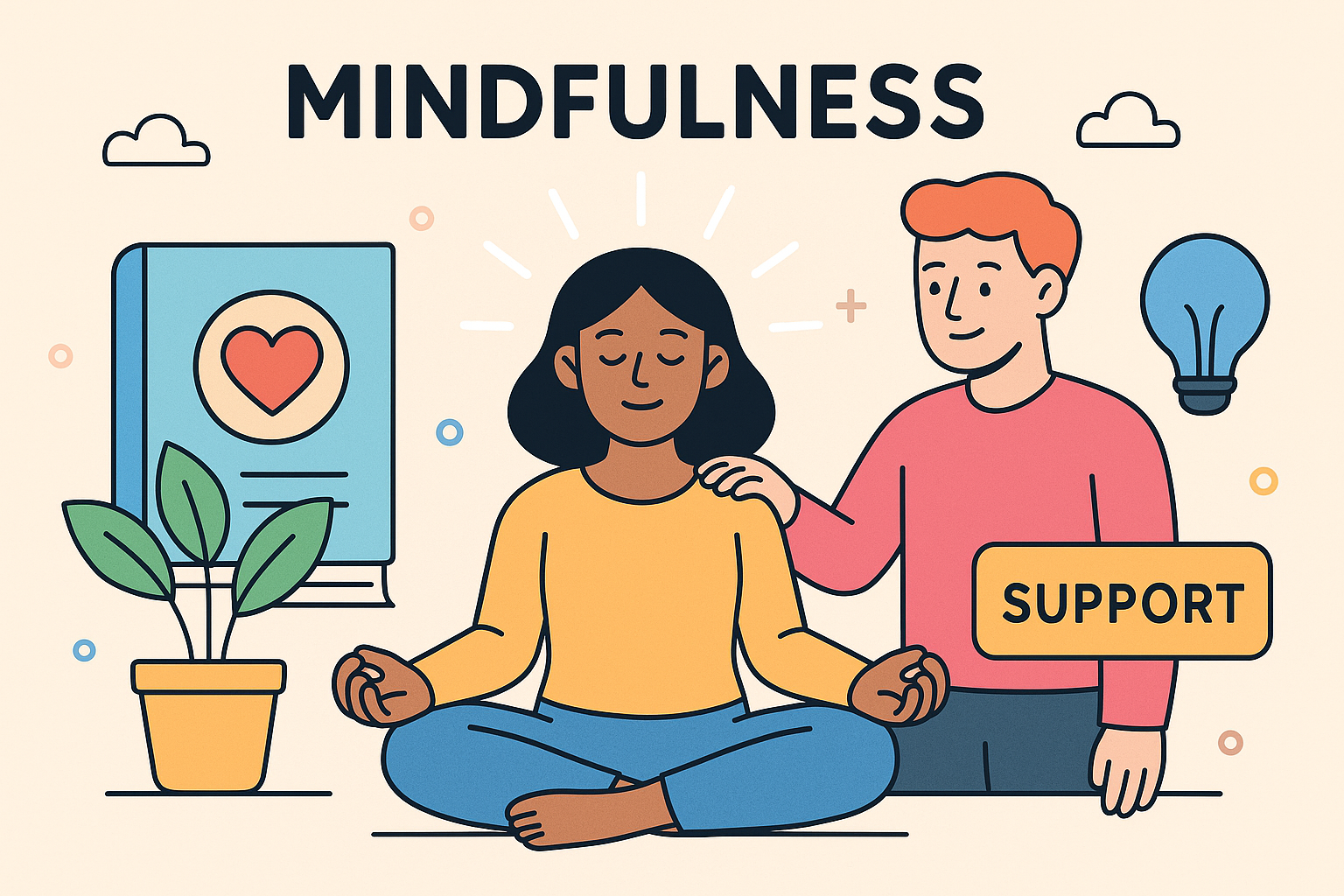
Heyfriend is an informational website for you to access resources on stress management, mindfulness, employment, resume writing, interviewing, practicing English, and a custom conversational chatbot. Happy browsing!
Invitations
- Three Deep Breaths:
- Breathe and Let go:
- Counted Breathing:
Let’s pause for a moment. Take a slow, deep breath in through your nose... and let it out gently through your mouth. Again, breathe in slowly... and exhale slowly. One more time—inhale peace... exhale tension. That’s it. Just three deep breaths can help your body and mind feel more calm and steady.
Sit comfortably, feet on the ground if possible. Close your eyes or soften your gaze. As you breathe in, say to yourself: “I am here.” As you breathe out, say: “I let go.” Repeat this quietly in your mind for a few rounds of breath. Let your shoulders relax. Let your jaw unclench. Just breathe... and let go
Gently breathe in for 4 counts... 1, 2, 3, 4. Hold your breath for 2 counts... 1, 2. Now breathe out slowly for 6 counts... 1, 2, 3, 4, 5, 6. Try that two more times. Feel your body slow down and your mind begin to settle.
Exercises:
- 5-4-3-2-1 Grounding Exercise
- 5 things you can see
- 4 things you can touch
- 3 things you can hear
- 2 things you can smell
- 1 thing you can taste or a calming breath
- Hand Tracing Breath
- Breathe in as you move up a finger
- Breathe out as you move down
- Stand and Ground (Feet to Floor)
- Name It to Tame It
- Gratitude Pause
This activity helps bring awareness to the present moment using your five senses.
Take a moment to slowly name each one to yourself or out loud in a group. This helps bring your mind back to your body and the here and now.
Use your hand to guide your breathing. Spread one hand out like a star. With the other hand, slowly trace each finger:
Keep tracing all five fingers, slowly and gently. This calming movement helps you slow your breath and settle your nervous system.
A body-based practice to create stability and calm. Stand tall with feet shoulder-width apart. Gently press your feet into the ground and feel the floor holding you. Wiggle your toes. Feel your weight shift slightly forward and back. Say quietly to yourself: “I am grounded. I am safe.” Take a few slow breaths as you feel your body standing strong.
Use words to name what you're feeling. Take a quiet moment and ask yourself: “What am I feeling right now?” You can name emotions like: tired, angry, worried, calm, okay, numb. You can also write it down or draw it. Simply naming the emotion can help release some of its power.
Take a minute to name one thing you’re thankful for today. It could be something small: warm food, a kind neighbor, sunshine, or a deep breath. If you’re with a group, share it out loud. Gratitude helps shift our minds from stress to strength.
You can practice the below with your children or family member at home:
- Rainbow Walk (or Sit)
- Turtle Breathing
- Breathe in slowly as you bring your shoulders up to your ears
- Breathe out slowly as you let your shoulders fall Do this 3–5 times. Add a little wiggle and stretch when you “come back out.” It calms the body and teaches breath awareness.
- Five Finger Gratitude
- “I’m thankful for… my snack, my mom, my toy, my warm bed, the sunshine.” Let your child go next. Do it before bed or after school. Helps kids focus on the good—even on hard days.
- Animal movement Reset
- Stomp like an elephant 🐘
- Stretch like a cat 🐱
- Shake like a dog 🐶
- Fly like a bird 🕊️
- Calm-Down Box or Bag
- A soft piece of fabric
- A stress ball
- A photo of someone they love
- Crayons and paper
- A small snack or gum
- Family Nature Walk
- Nature Scavenger Hunt
A mindfulness scavenger hunt for the senses. Together, look for something around you in every color of the rainbow: 🔴 Red, 🟠 Orange, 🟡 Yellow, 🟢 Green, 🔵 Blue, 🟣 Purple Ask your child: “What do you see that’s green?” You can do this while walking to school, riding the bus, or even sitting in a room. It helps kids slow down and feel grounded in the present.
A playful breathing technique. Say: “Let’s pretend we’re turtles going into our shells.”
A quiet activity that builds calm and connection. Hold up a hand and touch each finger as you say one thing you’re thankful for.
Let big emotions move through the body. Say: “Let’s shake out the stress like animals!”
Finish with a deep breath and stillness, like a resting turtle. Great for transitions or releasing pent-up energy.
Create a sensory toolkit with your child. Fill a box with calming items:
When your child feels overwhelmed, they can choose an item and sit with it. You can sit quietly with them or guide a breathing activity.
Take a walk together in nature with your child as a family. It can be a park, or a garden, or any green space near your home. It does not matter how big or small. It could even be walking down a street with trees or going outside and standing barefoot in the grass together. Notice and talk about what you see, hear, touch, and smell. Take time to walk slowly and observe your surroundings. Follow your child’s lead. Often children will stop and look at a tiny flower or insect. Join them and focus on what has caught their attention. No need to rush them along. Children are great examples of how to be mindful in nature. Keep a nature notebook using paper or keeping track of the notes feature of your phone. Include photos, drawings, pressed flowers, and notes to record your outdoor observations.
Here is an example. Print or write down a list of nature items to find. Here is a suggestion or you can make your own! Modify our list to fit your scene (park, nature center, woods, seashore, backyard, etc.) Color in items as you go or draw/write about your discoveries in the blank boxes. For very young kids, consider filling in the blank boxes with items you think they will enjoy finding. For older kids, consider downloading the iNaturalist app and encourage them to use the app to help identify the plants, trees, tracks, and creatures they discover. If you prefer, you can use a free app together as a family such as Outdoor family fun with Plum. Available for free: Plum Apple App Store and Plum Google Play.
Disclaimer: If you experience stress, please contact dolweean@mytrellus.org or Trellus: (773) 564-4944 or Website